Skip to content
Kitchener Prestige Flooring

Repair & structural

Floor Levelling and Patching in Kitchener, Ontario

Most vinyl joint failures, cracked tiles and hollow-sounding floors start with a subfloor that was never made flat. Kitchener Prestige Flooring levels and patches concrete and wood subfloors for homeowners, builders and commercial clients across Kitchener and Waterloo Region.

Over 16+ years and more than 1,700 flooring jobs, we have learned to measure first and pour second. Every levelling job starts with a straightedge, a laser and the flooring maker's tolerance sheet.

Our crew is licensed, insured and WSIB covered. Levelling work carries a written 1-year labour warranty, and it is priced as its own line on your flooring quote.

  • Licensed & insured
  • WSIB covered
  • 1-year labour warranty
  • Free in-home estimates
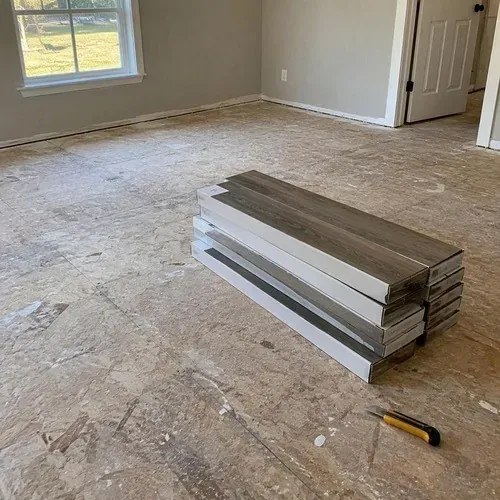
Levelled subfloor ready for new flooring with vinyl plank boxes stacked

Level Is Not the Same as Flat

This distinction decides which fix you need, and almost nobody explains it.

Level means the floor is horizontal, measured against gravity with a spirit level or laser. Flat means the surface has no dips, humps or ridges, measured with a straightedge.

A floor can slope an inch across a room and still be perfectly flat, like a tilted tabletop. Most flooring products only care about flatness. Slope matters for looks, doors and furniture, and it needs a structural fix.

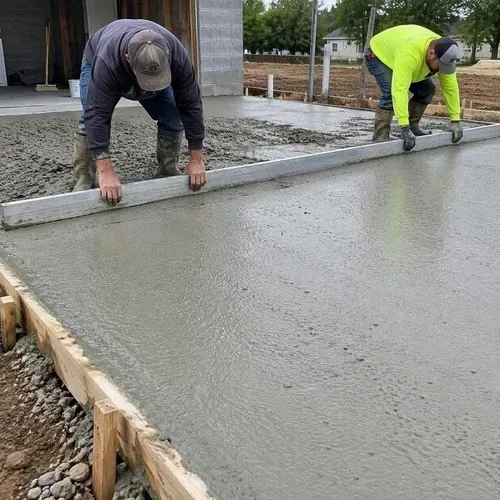
Straightedge used to check and flatten a floor before new flooring

Flatness Tolerances by Floor Covering

These are the typical flatness limits published by flooring manufacturers and industry standards. We check every room against the one that applies.

Floor covering Typical flatness tolerance
Carpet Minor variation acceptable
Laminate and floating engineered wood 3/16 inch over 10 feet
Luxury vinyl plank, click 3/16 inch over 10 feet, 1/8 inch over 6 feet
Glue-down vinyl and LVT 1/8 inch over 6 feet, 1/32 inch over 1 foot
Nail-down hardwood 1/4 inch over 10 feet, 3/16 inch over 6 feet
Tile, all sides under 15 inches 1/4 inch over 10 feet
Large format tile, any side 15 inches or more 1/8 inch over 10 feet, 1/16 inch over 2 feet

Structural problems like rot and sag belong on our subfloor repair and replacement page. This page is about the surface.

Methods We Use

The right method depends on how far out the floor is and what it is made of.

Self-Levelling Cementitious Underlayment

Self-levelling underlayment is a cement-based compound that flows out and finds its own level. It is poured over large areas that are out of tolerance.

We use professional products from makers such as Ardex and Mapei. Over wood subfloors, we fasten metal lath first to reinforce the pour.
Patching Compound for Local Dips

Small low spots, seams and cracks are filled with a trowel-applied patch that can be feathered to nothing at the edges. It sets quickly and sands smooth.

Patching is ideal for isolated dips, old adhesive scars and plywood seams under vinyl.

Sanding and Grinding High Spots

High spots are removed, not buried. On concrete we grind with diamond tooling and dust extraction, and on wood we sand humps and planed ridges.

Grinding first often means far less compound, which saves time and money.

Shimming and Sistering for Structural Slope

When a whole floor slopes, compound is the wrong tool. We shim the tops of joists or sister new joists alongside the old ones to bring the frame back to level.

This is common in century homes in Kitchener and Cambridge, where foundations have settled over a hundred years.

Priming, Bond Coats and Why Levelling Fails

Levelling compound fails when it does not bond. It cracks, sounds hollow or lifts in sheets.

Every surface is cleaned and primed with the compound maker's primer. Primer seals porous concrete so it does not suck water from the mix, and helps it grip smooth or wood surfaces.

We also dam doorways and seal gaps at walls and penetrations so compound does not flow into the basement below.

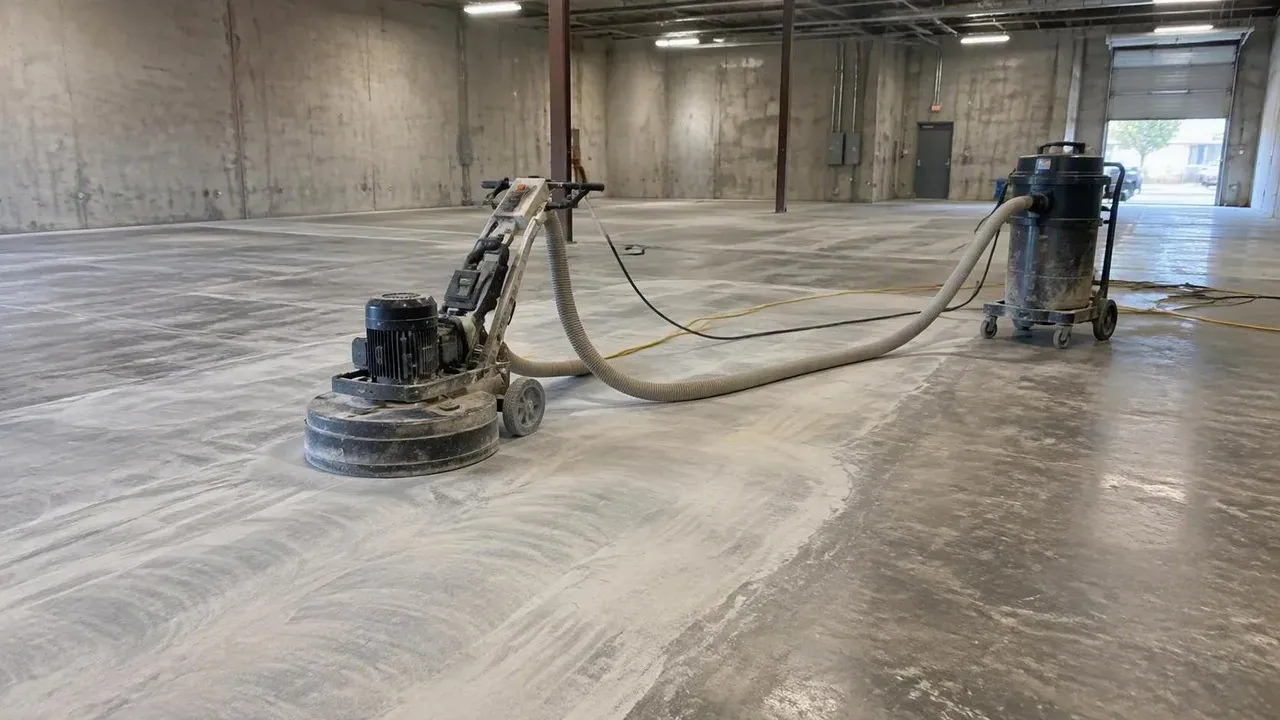
Concrete high spots ground down with a dust-extracted grinder

Depth Limits, Feather Edges and Aggregate Fill

Each product has a minimum and maximum thickness. Too thin, and it cracks. Too thick without aggregate, and it shrinks and cracks as it cures.

Most self-levellers pour from about 1/8 inch up to around 1 to 1-1/2 inches in a single lift. Deeper fills get clean pea gravel mixed in, or are built up in layers.

Feather-edge patch products taper to zero at the edges so there is no ridge where the fill meets the original floor.

Cure Times Before Flooring Can Go Down

Levelling compound is walkable within a few hours, but that is not the same as ready for flooring.

  • Tile: often within 12 to 24 hours for most rapid-setting products.
  • Floating floors: usually after 24 hours, once the surface is dry.
  • Glue-down vinyl and wood: after 24 to 72 hours or more, and only once moisture tests pass.

Thick pours and cold, damp basements take longer. We test before installing moisture-sensitive floors.

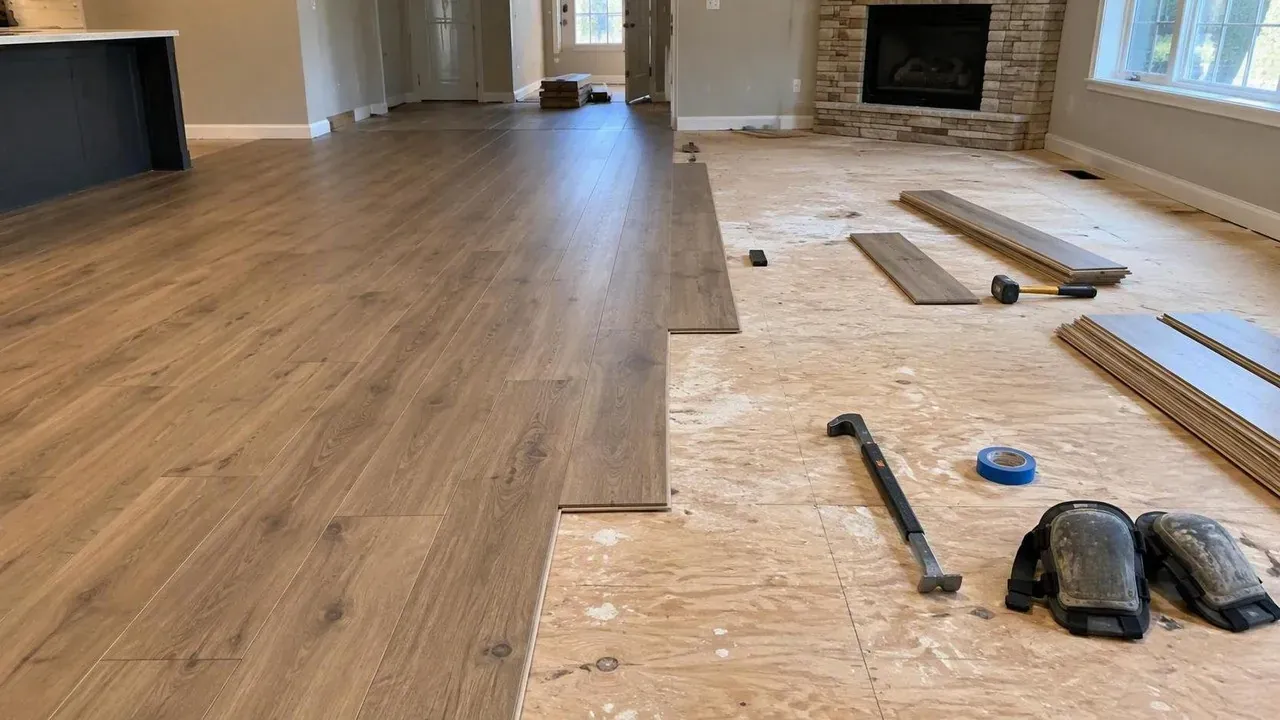
Plank flooring installed over a freshly levelled subfloor

Levelling Over Radiant Heat and Membranes

Electric floor heating mats are often embedded in a thin layer of self-levelling compound. That protects the cable and gives a flat surface for tile or vinyl.

We test the cable before and after pouring. Over uncoupling membranes, we follow the membrane maker's rules on which compounds can be used.

Levelling Costs Per Square Foot and Per Bag

A 50 pound bag of self-levelling compound covers roughly 50 square feet at 1/8 inch, or about 25 square feet at 1/4 inch. Professional products cost around $45 to $70 per bag.

Item Typical cost per sq ft
Patching local dips and seams $1.00 to $3.00
Self-levelling, 1/8 to 1/4 inch, primed $2.50 to $5.00
Deeper pours or lath over wood $4.00 to $8.00
Grinding high spots on concrete $1.50 to $3.00

Levelling is the step that makes luxury vinyl plank and tile flooring installation last. For full new slabs, see concrete floor installation. All levelling work carries our 1-year labour warranty.

FAQ

Floor Levelling Questions

Straight answers to the questions we hear most. Still unsure? Call and ask.

Ask for a Free Quote

How flat does a floor need to be for vinyl plank?

Most vinyl plank makers require the floor to be flat within 3/16 inch over 10 feet and 1/8 inch over 6 feet. Thin glue-down vinyl is stricter still, about 1/8 inch over 6 feet and 1/32 inch over 1 foot.

Can you level a floor without tearing it out?

Often, yes. Concrete can be levelled directly after grinding and priming.

Sound wood subfloors can be levelled with a bonded compound over metal lath or with patch in low spots. The old floor covering usually has to come up first.

How thick can self-levelling compound be poured?

Most products pour from a feather edge up to about 1 to 1-1/2 inches in one lift. With pea gravel added, some can go several inches deep. We follow the specific product's limits.

Will levelling fix a sloping floor in an old house?

Levelling compound fixes flatness, not structural slope. A floor that drops several inches across a room needs shims, sistered joists or structural work first. We tell you which problem you have before recommending a fix.

Free estimate

Book a Free Floor Leveling & Patching Estimate

Tell us about the floor. We will call to book a time, measure on site, check the subfloor and moisture, and leave you a written quote.

Prefer to talk it through first? Call and speak to a flooring specialist directly.

  • Measured on site, with moisture and flatness readings
  • Written, itemized quote with no obligation
  • Licensed, insured, WSIB covered, 1-year labour warranty

Kitchener Prestige Flooring

137 Glasgow St, Kitchener, ON N2M 5E3

info@kitchenerflooring.ca

Monday to Saturday: 7:00am to 9:30pm

Sunday: 9:00am to 9:00pm

Call (548) 490-1518 Quote