Skip to content
Kitchener Prestige Flooring

Protection & treatments

Floor Vapour Barrier Installation in Kitchener, Ontario

Moisture coming up from below is the most common hidden reason new floors fail. Kitchener Prestige Flooring tests slabs and subfloors, then installs vapour barriers and moisture mitigation systems for homeowners, builders and commercial clients across Kitchener and Waterloo Region.

After more than 16 years and 1,700+ flooring jobs, we have replaced plenty of cupped hardwood, peeling vinyl and moldy carpet pad caused by moisture nobody measured. We specify barriers from test results, not guesswork.

Our crew is licensed, insured and WSIB covered. All barrier and mitigation work carries a written 1-year labour warranty.

  • Licensed & insured
  • WSIB covered
  • 1-year labour warranty
  • Free in-home estimates
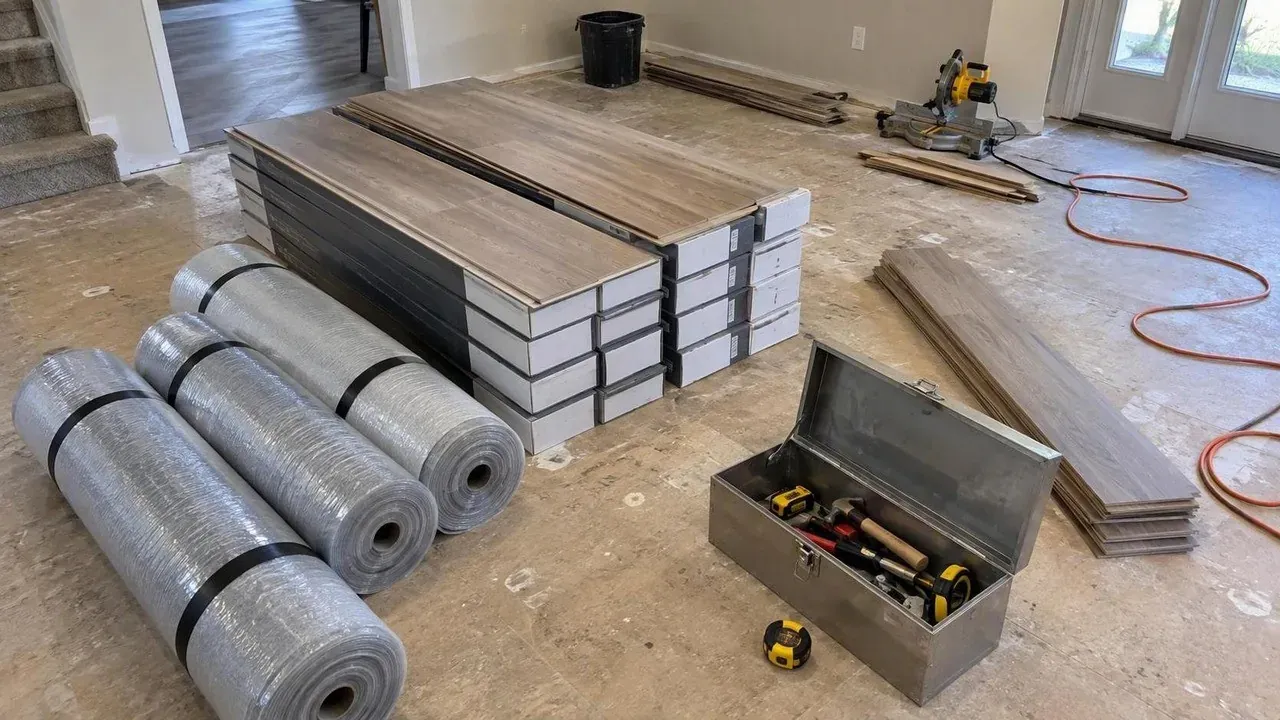
Underlayment and vapour barrier rolls staged beside flooring cartons before installation

Why Moisture From Below Ruins New Floors

Concrete is full of tiny pores that carry water vapour up from the ground. Put a floor on top without a barrier, and that vapour collects under it.

Wood cups and buckles. Vinyl adhesive softens and the planks lift or bubble. Carpet pad grows mould, and tile grout stays dark and damp.

These failures often appear months after installation, long after the floor is paid for. Because the cause is invisible, it is often blamed on the flooring product. We diagnose it first so your new floor does not become the next example.

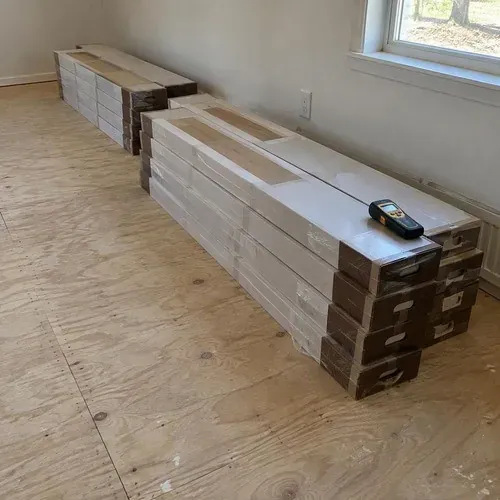
Moisture meter used to test flooring and subfloor before a vapour barrier is chosen

Where Vapour Barriers Are Required

Not every floor needs one, but these three situations almost always do.

Concrete Basement Slabs

Below-grade slabs sit against damp soil year round. Many Waterloo Region homes built before the 1990s have no polyethylene under the slab at all.

Every floor we install on a basement slab gets a barrier matched to the flooring, whether that is a sheet, an underlayment film or a moisture-tolerant adhesive.
Crawl Spaces and Unheated Undersides

Floors over crawl spaces and unheated garages pull moisture from below and lose heat. Bare dirt crawl spaces are especially damp.

A sealed ground cover and proper insulation protect the floor above and keep the space dry.

Slab on Grade Main Floors

Additions, sunrooms and some bungalows have main floors poured directly on the ground. They behave like basement slabs and need the same care.

Testing Before We Specify Anything

We never guess at moisture. Two tests give us the numbers we need.

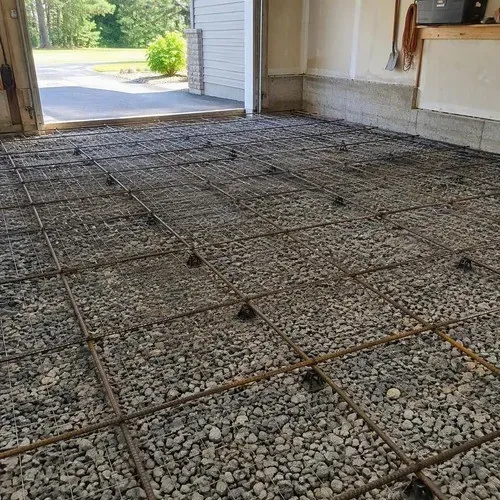
Compacted base prepared for a polyethylene vapour barrier under a new slab

Relative Humidity In-Situ Probe Testing

Under the ASTM F2170 standard, we drill small holes to 40% of the slab depth, insert sensors and let them settle for 24 hours. The reading shows the humidity inside the slab.

Most flooring and adhesive makers publish a maximum reading, often between 75% and 95% depending on the product.

Calcium Chloride Moisture Vapour Emission Testing

The ASTM F1869 test seals a dish of calcium chloride on the slab for 60 to 72 hours. The weight it gains shows how much moisture the slab releases.

Results are given in pounds per 1,000 square feet per 24 hours. Many products allow 3 to 5 pounds, while moisture-tolerant systems allow more.

Barrier Types and When Each Applies

We choose the barrier from the test results and the flooring going on top.

Polyethylene Sheet Under New Slabs

For new slabs and additions, a 10 mil polyethylene sheet goes over the compacted stone before the pour. Seams overlap and are taped, and edges are sealed at the walls.

It is the cheapest, most effective barrier there is, which is why we include it in every concrete floor installation.

Liquid-Applied Moisture Mitigation Membranes

For existing slabs that test too wet, we grind the surface and apply a two-part epoxy moisture mitigation system. It bonds to the concrete and blocks vapour at high emission rates.

It is the right answer before glue-down floors, which cannot sit on loose poly sheet. For above-floor protection against spills, see floor sealing and waterproofing.

Underlayment With an Integrated Vapour Retarder

Many floating floors use an underlayment with a film already attached. Over a dry slab, that film is often all you need.

We still tape the seams and run the film up the walls behind the baseboard. For engineered hardwood over concrete, this step protects the warranty.

Perm Ratings and What the Number Means

A perm rating measures how much water vapour passes through a material. Lower numbers block more.

  • Class I vapour barrier: 0.1 perm or less, such as 6 and 10 mil polyethylene.
  • Class II vapour retarder: 0.1 to 1 perm, such as some underlayment films.
  • Class III semi-permeable: 1 to 10 perms, such as latex paint and some felt papers.

Basement slabs usually need a Class I barrier. Wood subfloors over a heated space need something more breathable, so moisture is not trapped in the wood.

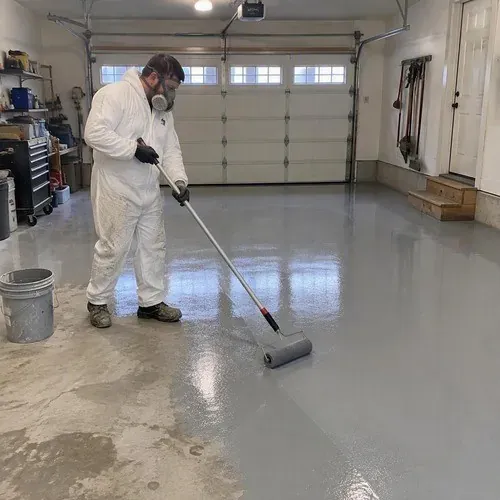
Liquid-applied moisture mitigation membrane rolled onto a concrete slab

Crawl Space Encapsulation

Many older farmhouses and village homes across Woolwich, Wilmot and Wellesley townships sit over dirt or gravel crawl spaces. Moisture from that ground rises straight into the floor framing.

Encapsulation covers the ground and walls with a 10 to 20 mil reinforced liner, sealed at seams, piers and the sill. The space is then dehumidified or conditioned.

It protects the floor above, reduces musty smells and makes the house more comfortable. Rotted joists and sheathing found along the way are fixed through our subfloor repair and replacement service.

Vapour Barrier Costs and Why It Is Worth It

Typical 2026 ranges in Waterloo Region:

Item Typical cost
Slab moisture testing, per home $150 to $350
Polyethylene sheet barrier, installed $0.30 to $0.75 per sq ft
Liquid moisture mitigation membrane $3.00 to $7.00 per sq ft
Crawl space encapsulation $3.00 to $8.00 per sq ft

Compared with replacing a failed floor, a barrier is cheap insurance. All barrier work carries our 1-year labour warranty.

FAQ

Vapour Barrier Questions

Straight answers to the questions we hear most. Still unsure? Call and ask.

Ask for a Free Quote

How do I know if my concrete slab has too much moisture?

Visible signs include white powdery deposits, dark damp patches, a musty smell and adhesive that never fully cures. The only reliable answer is a test, either in-situ relative humidity probes or a calcium chloride test, compared to the flooring maker's limit.

Can I just lay plastic sheeting under my floor?

Under a floating floor over a dry slab, a 6 mil polyethylene sheet with taped, overlapped seams is often exactly right. It is not a fix for a wet slab, and it cannot go under glue-down floors. Testing tells you which situation you are in.

Does engineered hardwood still need a vapour barrier?

Yes, over concrete. Engineered boards are more stable than solid, but moisture from the slab can still cup them. Floating installs get a polyethylene barrier, and glue-down installs use an adhesive with a built-in moisture membrane.

What moisture reading is too high to install over?

It depends on the flooring and adhesive. As a rough guide, many wood products need slab humidity at or below 75 to 80%, and many vinyl adhesives allow 85 to 95%.

Wood subfloors should read 12% or less. The manufacturer's number always wins.

Free estimate

Book a Free Floor Vapour Barrier Installation Estimate

Tell us about the floor. We will call to book a time, measure on site, check the subfloor and moisture, and leave you a written quote.

Prefer to talk it through first? Call and speak to a flooring specialist directly.

  • Measured on site, with moisture and flatness readings
  • Written, itemized quote with no obligation
  • Licensed, insured, WSIB covered, 1-year labour warranty

Kitchener Prestige Flooring

137 Glasgow St, Kitchener, ON N2M 5E3

info@kitchenerflooring.ca

Monday to Saturday: 7:00am to 9:30pm

Sunday: 9:00am to 9:00pm

Call (548) 490-1518 Quote