Manufacturing and Assembly Floors
Dropped parts, rolling carts, oils and cutting fluids. These floors need impact resistance and good chemical resistance with clearly marked work cells.
Commercial & specialty
Industrial floors carry forklifts, spills, hot wash-down and heavy loads every shift. Kitchener Prestige Flooring installs and repairs floors for manufacturing plants, warehouses, food processors and heavy equipment shops across Kitchener, Cambridge and Waterloo Region.
With more than 16 years and 1,700+ flooring jobs, we know that industrial floors are specified by what gets spilled, dropped and driven on them. We ask those questions first, then match the system.
Our crew is licensed, insured and WSIB covered, with site documentation ready for plant orientation. All industrial work is backed by a written 1-year labour warranty.
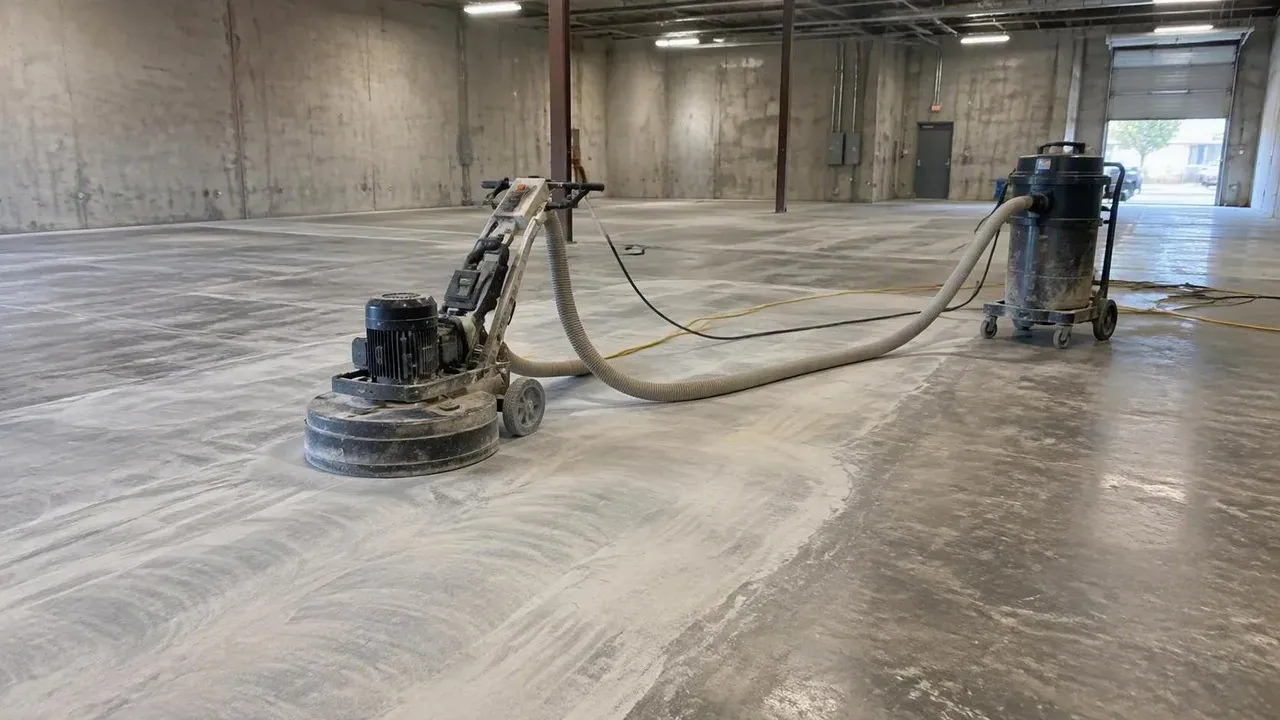
Offices and retail are covered on our commercial flooring page. This page is for plants, warehouses and process areas.
An industrial floor has to handle three things: mechanical load, chemical exposure and temperature. A system that excels at one can fail quickly at another.
Cambridge and Kitchener have one of Ontario's densest manufacturing bases, from automotive suppliers to food processing. Most of the floors we see failing were simply specified for the wrong conditions.
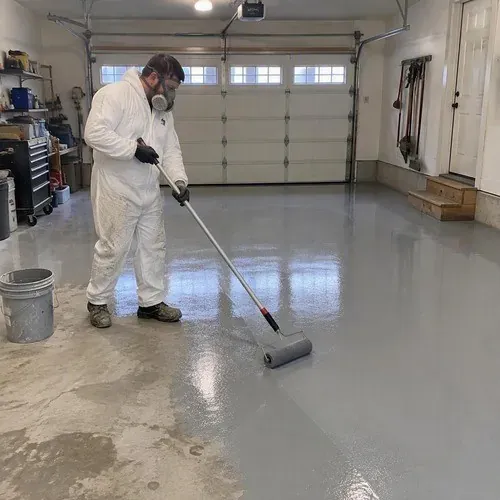
Each environment puts different demands on the floor.
Dropped parts, rolling carts, oils and cutting fluids. These floors need impact resistance and good chemical resistance with clearly marked work cells.
Heavy wheel loads and constant traffic along the same lines. Dust control and joint protection matter more than chemical resistance here.
Hot water wash-down, steam, sugars, fats and food acids. Floors must be seamless, sloped to drains, slip resistant and easy to sanitise.
Oils, fuels, brake fluid, hot tires and dropped tools. A tough coating with good fuel resistance keeps the slab from soaking up spills.
We match the system to the duty, not to a price per square foot.
Urethane cement is applied at 3/16 to 3/8 inch and handles extreme temperatures, from freezer rooms to steam cleaning. It is the standard for food and beverage plants.
It can also go on newer or damper concrete than most epoxies accept.
Trowelled epoxy mortars and heavy-build epoxy coatings create a thick, impact-resistant floor. They suit assembly, machine shops and areas with dropped parts.
Epoxy novolac topcoats add resistance to stronger acids and solvents. See our epoxy flooring installation page for more on resin types.
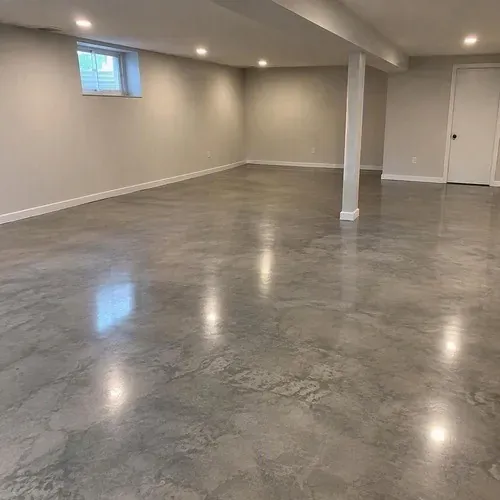
In dry warehouses, polished and densified concrete is often the best value. There is no coating to wear off, it is easy to clean and it reflects light.
It is not suitable for heavy chemical spills. Learn more on our concrete polishing page.
The first question we ask is what gets spilled. The answer drives the specification.
| Exposure | Polished concrete | Standard epoxy | Epoxy novolac | Urethane cement |
|---|---|---|---|---|
| Water and mild detergents | Good | Excellent | Excellent | Excellent |
| Oils, fuels and hydraulic fluid | Fair, stains | Good | Excellent | Excellent |
| Food acids, sugars, dairy | Poor | Fair | Good | Excellent |
| Strong acids | Poor | Poor | Excellent | Good |
| Caustics and alkaline cleaners | Fair | Good | Excellent | Excellent |
| Hot water and steam | Good | Poor | Fair | Excellent |
We confirm against the manufacturer's chemical resistance charts for your specific chemicals and concentrations.
Clear floor markings keep people and forklifts apart. We lay out and paint aisles, pedestrian walkways, work cells, hazard zones and equipment keep-out areas.
Colours follow common industry conventions, such as yellow for traffic lanes and red for fire equipment. Markings are applied in durable coatings or tapes rated for forklift traffic.
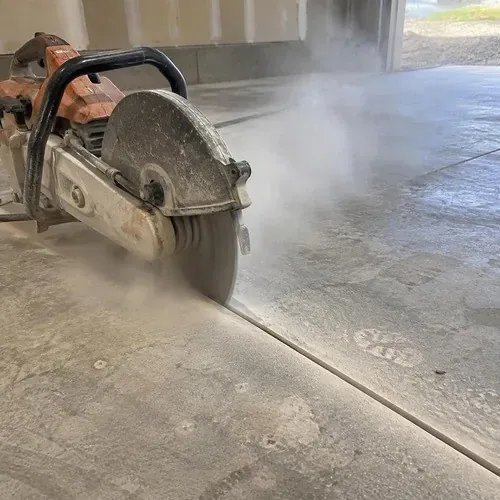
Joint failure is what actually destroys most industrial floors. Every forklift crossing hammers the edges of an open joint.
The edges chip, the joint widens, and the damage spreads along the joint and into the slab. Coatings fail where the joint fails.
We rebuild damaged edges with resin mortar, then fill joints full depth with a semi-rigid polyurea that supports the wheels. In the heaviest traffic lanes, we install steel-armoured joints. Cracks elsewhere in the slab are handled through concrete crack repair.
Most plants cannot stop for a week. We plan installations around your production.
These are typical return-to-service times at around 20 degrees Celsius.
Colder slabs slow every system down. We measure slab temperature and plan for it.
Keep exploring
Where this service is in highest demand:
FAQ
Straight answers to the questions we hear most. Still unsure? Call and ask.
Ask for a Free QuoteUsually, yes. We divide the floor into zones and coat them in sequence during weekends, shutdowns or off shifts, using fast-cure systems where return to service is critical. Production moves around the active zone.
Urethane cement. It tolerates thermal shock from hot water and steam cleaning, resists food acids and cleaning chemicals, and bonds to concrete that is not perfectly dry. Standard epoxy tends to crack under repeated thermal shock.
Hard forklift wheels hammer the unsupported edges of open joints every time they cross. The edges chip and spall, the joint widens, and the damage spreads. Filling joints full depth with semi-rigid polyurea, or armouring them with steel, stops it.
It depends on the system. Polished concrete is usable immediately, urethane cement typically in 8 to 24 hours, and heavy-build epoxy in 24 to 72 hours. We plan the system around your downtime window.
Free estimate
Tell us about the floor. We will call to book a time, measure on site, check the subfloor and moisture, and leave you a written quote.
Prefer to talk it through first? Call and speak to a flooring specialist directly.
Kitchener Prestige Flooring
137 Glasgow St, Kitchener, ON N2M 5E3
Monday to Saturday: 7:00am to 9:30pm
Sunday: 9:00am to 9:00pm